Careful research beginswith clear choices.
This page sets out how the project approaches consent, data protection, secure research systems and the careful communication of findings.
Data, privacy and choice
You choose whether to take part and what to share.
MyPhone/MyBrain may use different kinds of information. This can include survey answers, EEG recordings, task results and optional digital data. For young people who take part in the workshop it may also include linked education and health records, with the approvals in place; a parent or carer can opt their child out of the workshop, and so out of linking, by email. Sharing phone data is opt-in. We explain the information that applies to each activity before anyone decides.
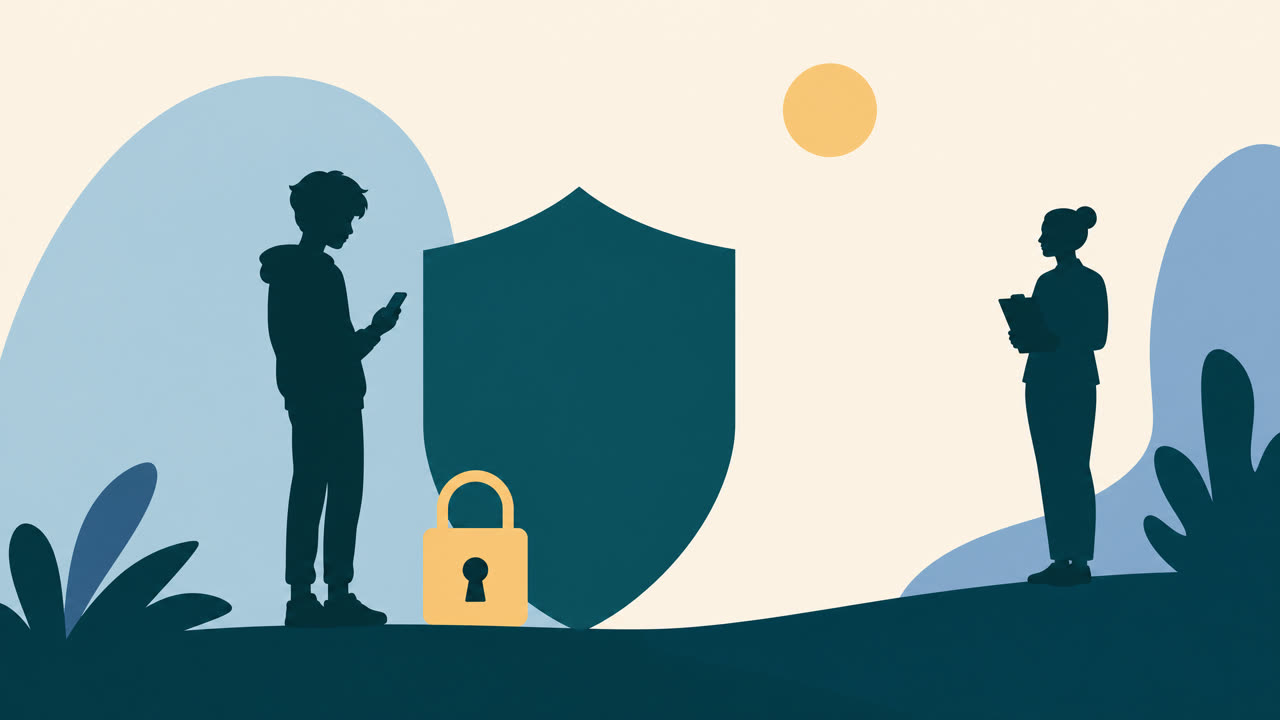
Taking part is your choice
Parents and carers can opt their child out of the workshop, and young people can say no or stop at any time. Phone data donation is optional, separate, and only happens if the family opts in.
You decide what feels right
Young people can choose the parts of the study they are happy to do. Families see each screenshot before it is sent, and can hide any part of it.
We use secure systems
Screenshots are sent securely and kept with a code instead of a name. Research data and linked records are stored and analysed in secure systems with controlled access.
We protect people’s privacy
Researchers use coded or anonymous data wherever possible. We share findings about groups of people, rather than individuals.
Access is carefully controlled
Sensitive information is held in secure systems. Approved researchers can only access it through agreed procedures, including those used by Connected West Yorkshire.
Data are not for sale
The project is for research and public benefit. We do not sell data or give it to social media companies for marketing or other commercial use.
The study does not give personal results
The study does not diagnose pupils, rank them or give individual brain or digital profiles to schools or families.
We will share findings carefully
Young people, parent representatives and school leaders will help us decide how to share findings in a fair and respectful way.
How data moves through the project
- Information for pupils and families, with the choice to opt out, or to opt in to sharing phone data
- The workshop at school, and screen time shared online
- Secure data handling
- Research using data without direct personal details
- Findings and resources for groups
The details, for families, schools and data protection officers
- Who is responsible: the University of Leeds is the data controller.
- Legal basis: public task (UK GDPR Article 6(1)(e)); for special category data, such as health records and information about wellbeing, research in the public interest (Article 9(2)(j)). The study’s data protection impact assessment was signed off by the University in May 2026.
- How long we keep it: research data for up to 10 years after the project ends, in line with University of Leeds research data guidance. Names and contact details are kept apart from research data.
- Where it is kept: information given on this website, including screenshots, is stored for the University in Google Cloud’s London region. Linked records stay within Connected West Yorkshire’s secure systems.
- How we improve this website: we count, anonymously, which pages and parts of pages are read and for how long, which links are followed, and where people stop or need to fix something in the online forms, so that we can make them easier to use. Apart from remembering if you choose not to be counted, nothing is stored on your device, and it doesn’t record who you are, your IP address or anything you type. The counts are deleted after a year.
- Questions about your data or your rights: the University’s data protection team, dpo@leeds.ac.uk. About the study: brainpop@leeds.ac.uk.
Read the information sheet.
Everything about taking part, in one place: what happens at school, how taking part and opting out work, sharing screen time, and what happens to your child’s information.